Report
on inspection of the premises in the clinic of hemodiaysis at St Marina Hospital, Varna

Translation from Bulgarian:
Original in Bulgarian: Page 1 Page 2 Page 3 Back to chronology

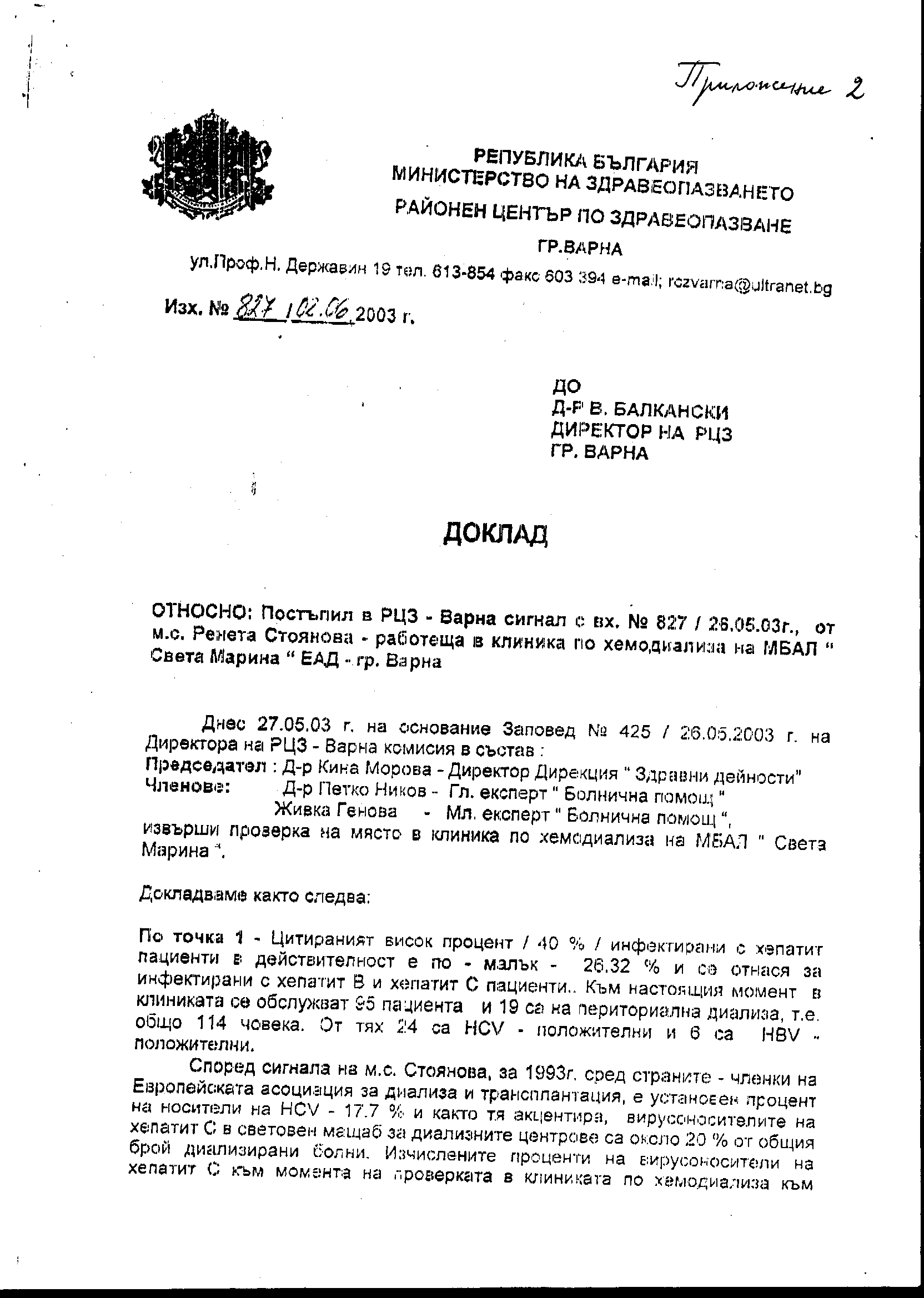
REGIONAL CENTER OF HEALTH
OUTGOING # 827 of 8-Jun-2003

TO:
DR V. BALKANSKI
DIRECTOR OF RCH
VARNA
REPORT


RE: Alerting letter, incoming # 827 of 26-May-2003 by Reneta Stoyanova, a health worker in the clinic of hemodiaysis at St Marina Hospital, Varna

Today, 27-May-2003, a commission comprising a chairman and two members [names of two physicians and a junior expert in hospital aid] has performed an inspection of the premises in the clinic of hemodiaysis at St Marina Hospital.

We report as follows:

On item 1. The cited high percentage (40%) of patients infected with hepatitis in reality is lower: 26.32% and relates to patients infected with hepatitis B and C. By the present moment 95 patients are serviced at the clinic and 19 are on peritoneal dialysis, i.e. 114 patients altogether. From them 24 are HCV-positive and 6 are HBV-positive.

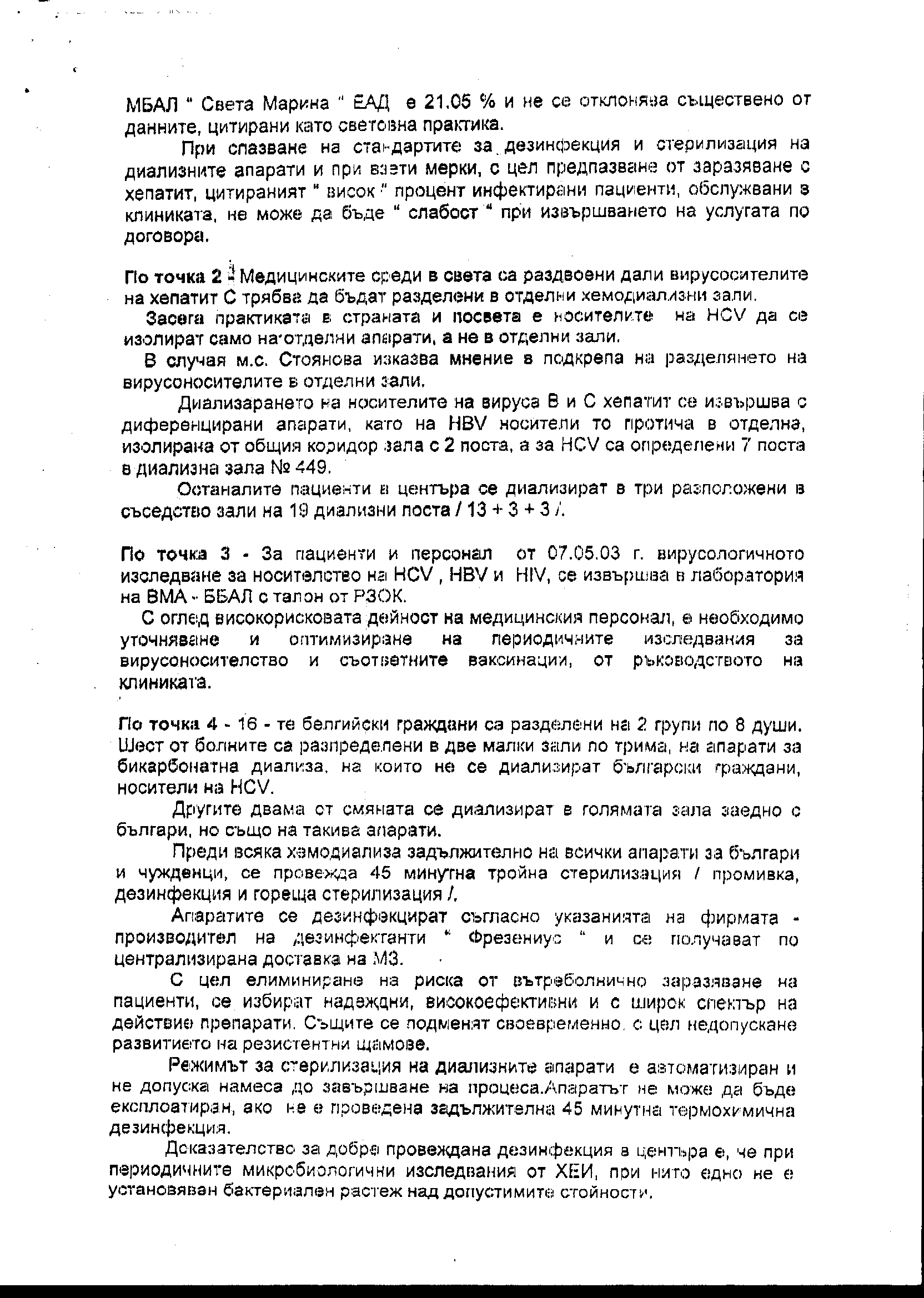
According to Reneta Stoyanova's letter, for 1993, among the countries members of the European Association of Dialysis and Transplantation, the percentage of HCV carriers was 17.7% and, as she emphasizes, the virus carriers of hepatitis C on a world scale for the HD centers are about 20% of the total number of patients. The percentage calculated in the St. Marina clinic of hemodialysis by the time of the inspection is 21.05% and does not decline substantially from the data cited as world practice.

When the standards of disinfection and sterilization of the dialysis machines are observed and when measures in order to prevent infection with hepatitis are taken, the cited "high" percentage of infected patients being served in the clinic cannot be "a weak point" while the service under the contract is performed.


On item 2. Medical circles are divided as to whether the hepatitis C carriers should be isolated in separate hemodialysis rooms.

For the time being, the practice in this country and around the world is for the carriers of HCV to be isolated only on separate machines but not in separate rooms.

In this case, nurse Stoyanova makes a point in support of isolating the carriers in a separate room.

The dialyzing of virus B and C hepatitis carriers is performed on separate machines; for the HBV carriers it is in a room, isolated from the common corridor, with 2 stations, and for the HCV carriers 7 stations are devoted in room 449.

The remaining patients in the center are dialyzed in three rooms located in vicinity on 19 dialysis stations (13 + 3 + 3)


On item 3. Since 7-May-2003, the patients and the staff's serologic tests for HCV, HBV and HIV have been performed in the Navy Hospital with a reference bill from the Regional Health Insurance Fund.

In view of the high risk of the medical staff's activities it is necessary that specification and optimization be made of the periodic serologic tests for viruses and the relevant vaccinations by the leadership of the clinic.


On item 4. The 16 Belgian citizens have been divided into 2 groups of 8 persons. Six of the patients have been accommodated in the two small rooms by three in each on bicarbonate dialysis machines on which no Bulgarian citizens who are HCV carriers are dialyzed.

The other two from the shift are dialyzed in the big room together with Bulgarians but also on such machines.

Before every hemodialysis all the machines both for Bulgarians and for foreigners undergo a mandatory three-step 45-minute-long sterilization (rinse, disinfection and hot sterilization)

The machines are disinfected according to the instructions of the company manufacturer of disinfectants, Fresenius, and are received along a centralized delivery of Ministry of Health.

In order to eliminate the risk of nosocomial infection of patients, reliable and highly effective disinfectants are selected with wide spectrum of action. The same are regularly changed in order not to allow any development of resistant microbiological strains.

The sterilization mode of the machines is automated and does not permit any intervention until the end of the process. A machine cannot be started if the mandatory 45-minute thermochemical disinfection has not been performed.

The proof that disinfection is conducted well in the center is that during the periodic microbiologic tests by Hygienic Inspection, not a single one has found a bacterial growth above the admissible values.

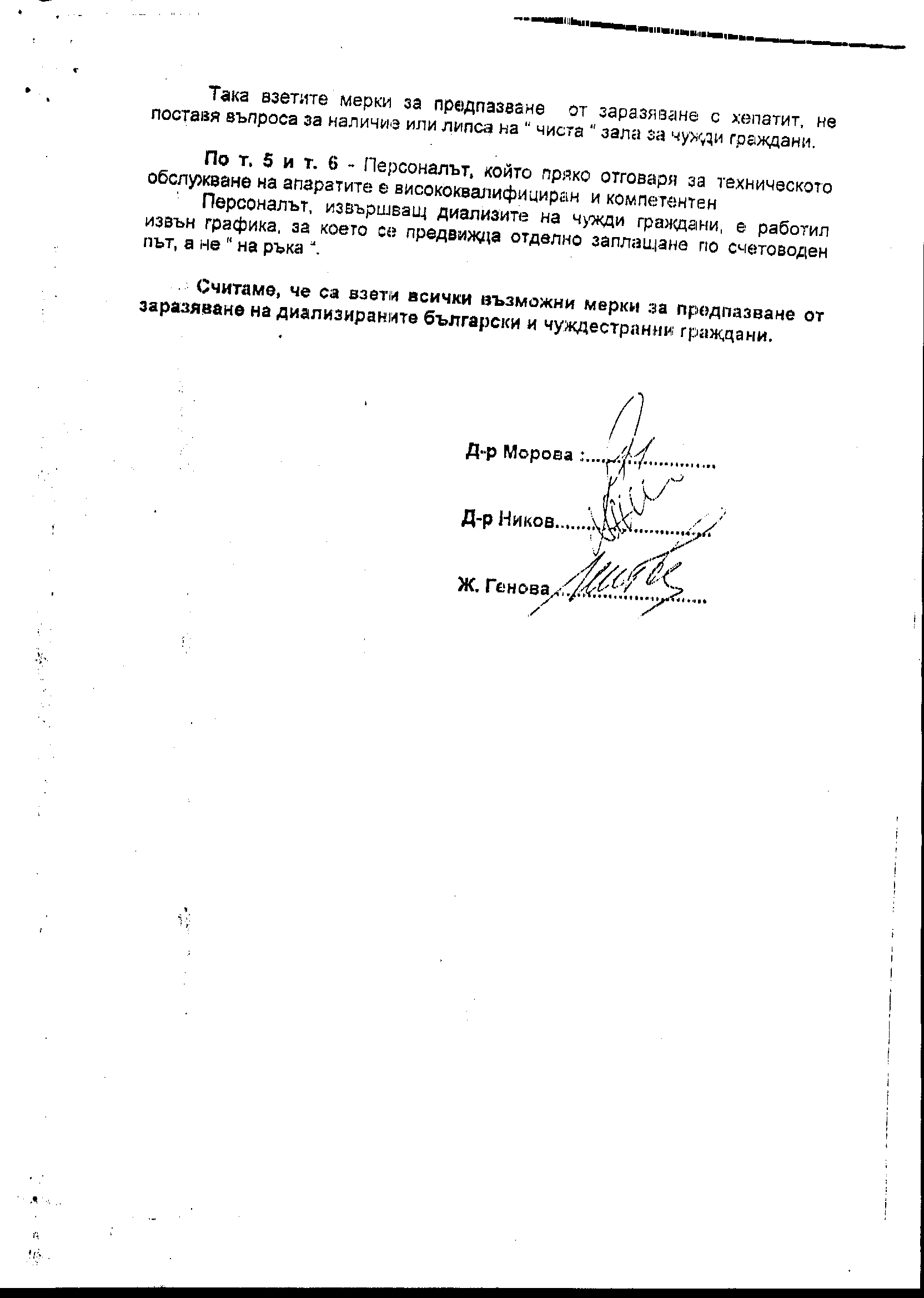
Thus taken measures for protection of infection with hepatitis does not pose the question of availability or lack of "clean" room for foreign citizens.


On item 5 and 6. The staff directly involved in the technical maintenance of the machines is highly qualified and competent.

The staff performing the dialyses of the foreign citizens has worked outside the working schedule for which a separate payment is provided through accounting and not "by hand".


We think that all possible measures have been taken to prevent both the Bulgarian and the foreign patients on dialysis from infection.


[three names and signatures]